
Many parents assume baby teeth are temporary—and therefore not worth worrying about. After all, they’ll fall out eventually, right? This is one of the most common misconceptions in early childhood health, and it can lead to serious, preventable consequences.
Baby teeth are far more than placeholders. They play a critical role in your child’s ability to eat, speak, and develop properly—and the habits formed during these early years can shape their oral health for life. Understanding the baby teeth care importance is the first step toward giving your child a healthy, confident smile that lasts well beyond childhood.
What Are Baby Teeth?
Also known as primary teeth, baby teeth are the first set of teeth that develop in a child’s mouth. They’re smaller than permanent teeth and typically whiter in appearance, but they serve the same essential functions.
When Do Baby Teeth Start Appearing?
Most babies get their first tooth between 6 and 10 months of age, though some start as early as 3 months and others not until after their first birthday. The full set of 20 primary teeth usually erupts by age 3, beginning with the lower front teeth and progressing toward the back molars.
When Do Baby Teeth Fall Out?
Primary teeth typically begin to loosen and fall out around age 6, starting with the same front teeth that came in first. The process continues until around age 12 to 13, when most children have a full set of 28 permanent teeth. This means your child will rely on their baby teeth for up to 10 years—a significant portion of their early development.
Why Baby Teeth Matter More Than Most Parents Realize
Help Children Chew and Eat Properly
Healthy baby teeth allow children to bite, chew, and break down food effectively. Without them, children may struggle to eat a balanced diet, avoiding harder foods like fruits, vegetables, and proteins. Poor chewing also means food isn’t properly prepared for digestion, which can affect nutrient absorption during a critical period of growth.
Support Clear Speech Development
Teeth are essential for forming sounds. Letters like “s,” “th,” “f,” and “v” require the tongue and lips to interact with the teeth to produce the correct sounds. Missing or damaged baby teeth can interfere with this process, leading to speech delays or articulation difficulties that may require intervention later.
Guide Permanent Teeth Into Position
Baby teeth act as natural guides for incoming permanent teeth. Each primary tooth holds space in the jaw, signaling to the permanent tooth developing beneath it where to erupt. When baby teeth are lost prematurely—due to decay or extraction—neighboring teeth can drift into the space, causing the permanent tooth to come in crooked or impacted.
Promote Healthy Jaw Growth
Chewing stimulates the jawbone and supports healthy facial development. Regular use of primary teeth during early childhood encourages proper jaw growth and bite formation. Without this stimulation, the jaw may not develop symmetrically, which can contribute to bite problems and the need for orthodontic treatment down the road.
The Role of Primary Teeth in Overall Oral Health
Primary teeth’s oral health and lifelong dental wellness are deeply connected. Untreated decay in baby teeth can lead to bacterial infections that spread to the surrounding gum tissue and, in some cases, to the developing permanent tooth beneath. Infected primary teeth can disrupt the root formation of permanent teeth, setting the stage for complications years later.
Keeping baby teeth healthy also means maintaining healthy gums. Inflamed or infected gums create an environment where harmful bacteria thrive—bacteria that don’t disappear when baby teeth fall out. Establishing a clean, healthy oral environment early reduces the likelihood of gum disease and tooth decay affecting permanent teeth.
There’s also the orthodontic angle. Children who lose baby teeth early—due to preventable decay—are more likely to need braces or other orthodontic treatment as teenagers. Proper care of primary teeth now can reduce that risk significantly.
What Happens If Baby Teeth Are Neglected?
Early Childhood Cavities
Cavities are the most common chronic childhood disease. When decay is left untreated, it spreads quickly and can destroy the tooth entirely.
Tooth Pain and Infection
Painful teeth make everyday life difficult for young children. Dental infections can become serious medical issues if the bacteria spread beyond the mouth.
Difficulty Eating
A child in dental pain will often refuse to eat certain foods, which can compromise nutrition and slow healthy growth.
Speech Delays
Missing or damaged teeth disrupt normal speech development, sometimes requiring speech therapy to correct.
Premature Tooth Loss
When baby teeth are lost too early, surrounding teeth shift, and the permanent tooth loses its guide into proper alignment.
Increased Risk of Orthodontic Problems
Crowding, spacing issues, and misalignment become far more likely when primary teeth are lost prematurely or damaged by decay.
Beyond these direct effects, dental problems in young children are linked to school absences, poor sleep due to pain, and lower self-confidence—all of which affect a child’s quality of life in meaningful ways.
Understanding Early Childhood Tooth Decay
Early childhood tooth decay refers to severe cavities in children under age 6. It’s caused by prolonged exposure to sugars and acids, combined with inadequate oral hygiene.
High-risk habits include:
- Sleeping with a bottle: Milk, formula, and juice contain sugars that pool around the teeth overnight, creating ideal conditions for decay.
- Frequent sugary drinks: Juice, flavored milk, and sports drinks expose teeth to repeated acid attacks throughout the day.
- Poor brushing habits: Inconsistent or incorrect brushing allows plaque to build up unchecked.
- Sticky snacks: Foods like raisins, gummies, and crackers cling to tooth surfaces and are difficult for saliva to wash away.
Early childhood tooth decay prevention starts with understanding these risks and making simple but consistent changes to daily routines.
Daily Kids Dental Care Tips for Healthy Baby Teeth
Start Cleaning Before Teeth Erupt
Even before the first tooth appears, wipe your baby’s gums with a clean, damp cloth after feedings. This removes bacteria and sets the foundation for good oral hygiene.
Brush Twice Daily
Once teeth appear, brush them gently twice a day—morning and before bed. Use a soft-bristled, age-appropriate toothbrush designed for infants or toddlers.
Use Fluoride Toothpaste Correctly
For children under 3, use a smear of fluoride toothpaste about the size of a grain of rice. From ages 3 to 6, increase this to a pea-sized amount. Fluoride strengthens enamel and significantly reduces the risk of cavities.
Floss Once Teeth Touch
As soon as two teeth are touching, bacteria can hide between them. Begin flossing gently once a day to keep those tight spaces clean.
Offer Tooth-Friendly Foods
Cheese, yogurt, fresh vegetables, and water are great choices for dental health. These foods are low in sugar and many help neutralize acids in the mouth.
Limit Sugary Snacks and Drinks
Reserve sweets for mealtimes when saliva production is highest, and avoid letting children sip on juice or flavored drinks throughout the day.
Encourage Water Throughout the Day
Water—especially fluoridated tap water—rinses away food particles, reduces acid levels, and keeps the mouth hydrated. Make it the default drink between meals.
These kids dental care tips are simple to implement and highly effective when practiced consistently.
When Should Your Child Visit the Dentist?
The American Academy of Pediatric Dentistry recommends scheduling your child’s first dental visit by their first birthday, or within six months of their first tooth erupting—whichever comes first.
Early dental checkups do more than look for cavities. A pediatric dentist can assess jaw development, identify early signs of decay, apply fluoride treatments to strengthen enamel, and—when the time is right—recommend dental sealants to protect back teeth from decay. Parents also receive personalized guidance on brushing technique, diet, and habits like pacifier use or thumb sucking.
The earlier these visits begin, the more comfortable children become with dental care—reducing anxiety and making future appointments far easier.
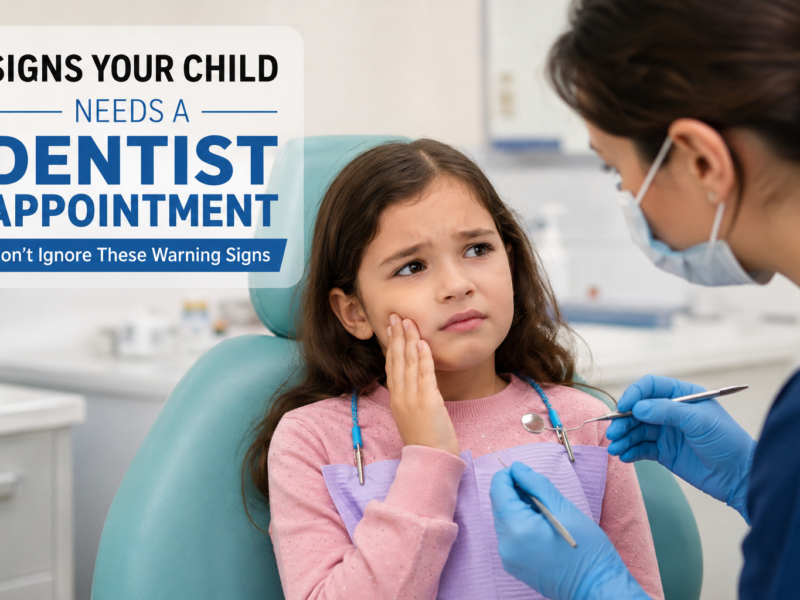
Signs Your Child May Have a Dental Problem
Watch for the following warning signs between checkups:
- White spots on teeth (an early sign of enamel breakdown)
- Brown or black spots on tooth surfaces
- Sensitivity to hot, cold, or sweet foods
- Swollen or bleeding gums
- Persistent bad breath
- Pain or discomfort while eating
- Baby teeth becoming loose significantly earlier than expected
If you notice any of these signs, schedule an appointment promptly. Early intervention is almost always simpler and less costly than treating a problem that’s been allowed to progress.
How Parents Can Build Lifelong Healthy Dental Habits
Healthy dental habits are built through routine and encouragement, not lectures. A few approaches that work well:
- Brush together: Children learn by watching. Brushing alongside your child makes the habit feel normal rather than a chore.
- Make it fun: Use a two-minute timer, play their favorite song, or choose a toothbrush featuring a beloved character.
- Reward consistency: A simple sticker chart can motivate young children to stay on track.
- Read together: Books like The Berenstain Bears Visit the Dentist help normalize dental care and reduce anxiety around visits.
- Lead by example: Children who see their parents prioritizing oral health are far more likely to adopt those habits themselves.
Why Choose Best Dentist 4 Kids for Your Child’s Dental Care?
Best Dentist 4 Kids provides gentle, child-focused dental care in a welcoming environment designed with young patients in mind. The experienced pediatric dental team understands that a child’s first experiences with dental care shape how they feel about it for life—which is why every visit is approached with patience, warmth, and a preventive mindset.
Families in Philadelphia trust Best Dentist 4 Kids for personalized treatment plans, thorough parent education, and a genuine commitment to each child’s long-term oral health. The focus is always on prevention—helping families avoid problems before they start, not just treating them after the fact.
Your Child’s Smile Starts Here
Baby teeth are the foundation of lifelong oral health. The care your child receives now—at home and at the dentist—directly influences how their permanent teeth develop, how confidently they speak and eat, and how much dental treatment they may need in the future. Prevention is almost always easier and less costly than treatment.
Don’t wait for a problem to appear before prioritizing your child’s dental health. Schedule your child’s preventive dental appointment with Best Dentist 4 Kids and help protect their smile from the very beginning.
Frequently Asked Questions
Ans: – Baby teeth serve critical functions for up to a decade, including helping children chew food, develop speech, and guide permanent teeth into their correct positions. Neglecting them can lead to infections, speech delays, orthodontic problems, and complications with incoming permanent teeth.
Ans: – Start as soon as the first tooth appears—typically around 6 months. Use a soft-bristled infant toothbrush and a rice-grain-sized amount of fluoride toothpaste. Before teeth erupt, wipe the gums with a clean, damp cloth after feedings.
Ans: – The American Academy of Pediatric Dentistry recommends a first dental visit by age one, or within six months of the first tooth appearing. Early visits allow the dentist to monitor development, provide fluoride treatments, and give parents guidance on home care.
Ans: – Yes. Untreated decay can lead to bacterial infections that spread to the gum tissue and the developing permanent tooth beneath. This can disrupt normal root formation and increase the risk of dental problems that persist well into adulthood.
Ans: – Early childhood tooth decay is primarily caused by frequent exposure to sugars—through juice, sweetened drinks, formula, or milk—combined with inadequate brushing. High-risk habits include sleeping with a bottle, constant sipping of sugary drinks, and infrequent or incorrect brushing.