Most parents assume orthodontic care is a teenage concern—something to think about when the last baby tooth falls out and the school photos start featuring metal braces. But pediatric dental experts recommend otherwise. A child’s teeth and jaw are actually developing rapidly during the early school years, and that’s precisely when certain problems are easiest to correct.
For Philadelphia families, scheduling an orthodontic evaluation for children in Philadelphia earlier than expected can make a significant difference. Catching bite issues, jaw misalignment, or crowding while the jaw is still growing gives pediatric dental providers options that simply aren’t available once development is complete. This guide covers everything parents need to know—from what an evaluation involves, to the signs that something may need attention, to why acting early protects your child’s long-term dental health.
What Is an Orthodontic Evaluation for Children?
An orthodontic evaluation is a focused assessment of how a child’s teeth, bite, and jaw are developing. It goes beyond a routine dental cleaning or cavity check. During a regular dental exam, the dentist examines tooth health—looking for decay, gum issues, and hygiene concerns. A pediatric orthodontic evaluation adds a developmental layer, examining how everything is growing and fitting together.
Specifically, a provider will assess:
- Bite alignment — how the upper and lower teeth meet
- Jaw development — whether the jaw is growing symmetrically and at the right pace
- Tooth eruption patterns — whether permanent teeth are coming in correctly
- Crowding — insufficient space for teeth to emerge properly
- Spacing — gaps between teeth that may indicate missing or delayed teeth
- Crossbite — when upper teeth sit inside the lower teeth
- Overbite and underbite — vertical and horizontal misalignments between upper and lower jaws
An early orthodontic assessment does not always lead to immediate treatment. Often, the goal is simply to establish a baseline and monitor development over time.
At What Age Should Children Have Their First Orthodontic Evaluation?
The American Association of Orthodontists recommends that children receive their first orthodontic evaluation by age 7. At this point, most children have a mix of baby teeth and permanent teeth, giving providers enough information to evaluate how the bite is forming and whether the jaw has adequate space for incoming teeth.
Age 7 is not a hard rule—every child develops differently. Some children may benefit from an earlier referral if a concern is noticed during a routine dental visit. Others may show no signs of issues whatsoever, and that’s perfectly fine. An evaluation at this age is not a guarantee of braces or any treatment. In many cases, the recommendation is simply to monitor the child’s development with periodic follow-up visits.
When should kids get braces? That depends entirely on the individual child. Some benefit from early intervention between the ages 6 and 10. Others won’t need braces until their mid-teens. The evaluation helps determine which path makes the most sense.
Signs Your Child May Need an Early Orthodontic Assessment
Parents are often the first to notice something seems off. If your child shows any of the following signs, it’s worth scheduling an early orthodontic assessment sooner rather than later:
- Crowded or overlapping teeth
- Noticeable gaps between teeth
- Baby teeth that fell out too early or too late
- Thumb sucking or pacifier use beyond age 4–5
- Difficulty chewing or biting food
- Chronic mouth breathing
- Upper and lower teeth that don’t meet properly when biting
- Speech difficulties or a lisp
- Jaw clicking or popping
- Visibly protruding upper or lower teeth
These signs don’t automatically mean a child needs treatment—but they do warrant a professional assessment. A pediatric dental provider can determine whether what you’re seeing is a normal part of development or something that should be addressed.
What Happens During an Orthodontic Evaluation?
The evaluation itself is straightforward and non-invasive. Here’s what to expect:
Dental Examination
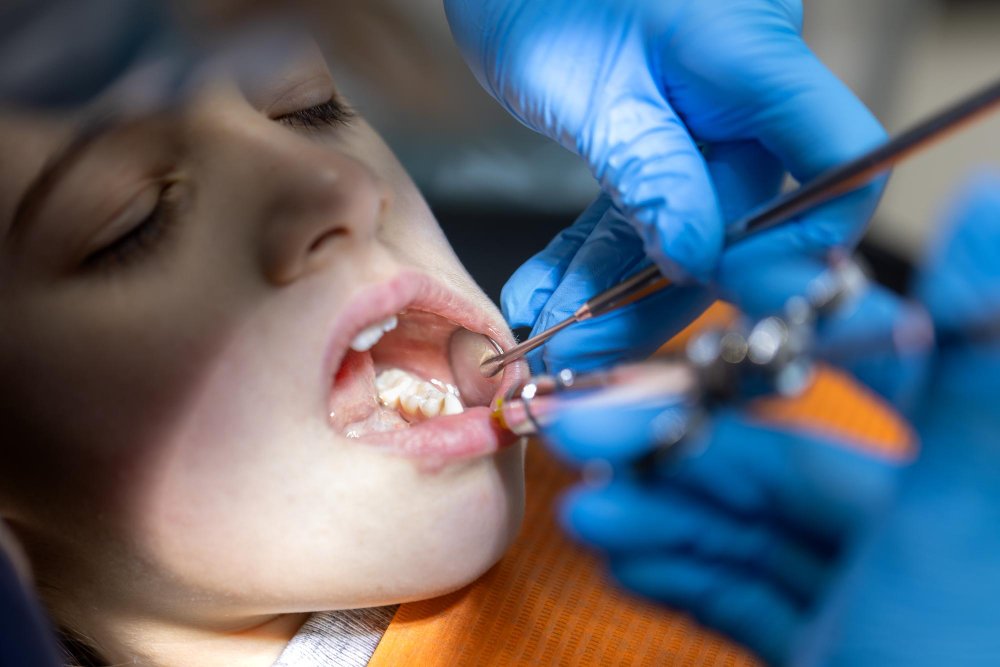
The provider begins with a visual exam of the teeth, gums, and mouth. This helps identify visible alignment issues, crowding, spacing problems, and the current stage of tooth eruption.
Digital X-Rays
X-rays reveal what can’t be seen with the naked eye—developing permanent teeth, root positions, jaw bone structure, and any teeth that may be impacted or growing at an angle. Digital radiography, used at Best Dentist 4 Kids, significantly reduces radiation exposure compared to traditional X-rays.
Bite Analysis
The provider assesses how the upper and lower teeth come together, checking for overbite, underbite, crossbite, or open bite. This analysis is central to understanding whether any intervention is needed.
Jaw Growth Evaluation
The jaw is evaluated for symmetry, size, and development pace. Since jaw growth is a key window for interceptive treatment, this step is particularly important in younger children.
Treatment Recommendations
Based on the findings, the provider will recommend one of several paths: observation only with scheduled follow-up visits, early intervention through Phase 1 orthodontics, or a referral to an orthodontic specialist if more complex treatment is required.
What Is Phase 1 Orthodontics for Children?
Phase 1 orthodontics—also called interceptive orthodontics—refers to early treatment typically provided between ages 6 and 10. Rather than waiting until all permanent teeth have erupted, Phase 1 orthodontic treatment takes advantage of the jaw’s natural growth to correct problems while they’re easier to address.
The goal is not necessarily to create a perfect smile right away. It’s to guide jaw development, create adequate space for incoming teeth, and reduce the severity of any future orthodontic work.
Common Phase 1 appliances include:
- Palatal expanders — widen the upper jaw to correct crossbites and crowding
- Space maintainers — hold space open after premature baby tooth loss
- Limited braces — address specific teeth without a full set of braces
- Habit appliances — help break thumb sucking or tongue thrusting habits that affect jaw development
Phase 1 treatment is followed by a resting period, then Phase 2 treatment in the teen years if needed. Not every child requires both phases—some complete Phase 1 and need minimal follow-up, while others skip Phase 1 entirely and begin treatment in adolescence.
Benefits of Early Orthodontic Evaluation
Getting an evaluation early carries benefits that extend well beyond straighter teeth:
- Detect problems before they worsen — issues caught early are usually simpler and less costly to treat
- Guide jaw development — the jaw is most responsive to correction during the growth years
- Lower the risk of impacted teeth — creating space early reduces the chance of teeth becoming stuck beneath the gum
- Reduce future treatment complexity — early intervention may shorten or eliminate the need for braces later
- Improve facial symmetry — jaw corrections during growth can have lasting effects on facial balance
- Support speech development — bite and tongue position affect pronunciation
- Improve chewing function — proper alignment makes eating more comfortable and effective
- Boost confidence — addressing visible dental issues early supports a child’s self-esteem during school years
For families seeking an orthodontic evaluation for children in Philadelphia, the earlier the assessment, the more options a pediatric orthodontic provider has available.
Does Every Child Need Braces?
No—and that’s an important point. An orthodontic evaluation does not automatically result in a treatment plan. Many children are evaluated at age 7 and simply placed on a monitoring schedule, with check-ins every six to twelve months to track development.
Some children benefit from early intervention and finish treatment with minimal work needed in their teen years. Others develop without significant issues and don’t need braces until adolescence, if at all.
When should kids get braces? The honest answer is: when their individual development calls for it. There is no one-size-fits-all timeline. That’s exactly why the evaluation process exists—to give each child a personalized roadmap rather than a generic one.
Why Philadelphia Parents Shouldn’t Delay an Orthodontic Evaluation
Early diagnosis consistently leads to better outcomes. When orthodontic problems are identified during the growth years, providers have a much wider range of tools at their disposal. Once jaw growth is complete, some corrections require more invasive approaches—or may not be fully achievable at all.
Philadelphia families have access to pediatric dental providers who understand child development and specialize in catching these issues at the right time. Preventive pediatric dental care, including early orthodontic screening, is one of the most effective investments a parent can make in a child’s long-term health. The earlier a provider can map your child’s development, the more personalized and proactive the care becomes.
Tips for Parents to Support Healthy Orthodontic Development
Between dental visits, parents play a key role in setting their child up for a healthy smile:
- Schedule regular dental checkups every six months
- Encourage thorough brushing twice daily and daily flossing
- Limit sugary snacks and drinks that accelerate tooth decay
- Address prolonged thumb sucking or pacifier habits before age 4–5
- Ensure your child wears a mouthguard during contact sports
- Follow your dentist’s advice if a baby tooth needs to be held in place or extracted
- Keep all recommended follow-up appointments, even when no treatment is underway
Small habits at home support the work that happens in the dental chair.
Why Choose Best Dentist 4 Kids for Pediatric Orthodontic Evaluations in Philadelphia?
Best Dentist 4 Kids was built around one idea: that children deserve dental care designed specifically for them. The practice offers a child-friendly environment at both the Philadelphia and Hatboro locations, complete with game rooms, televisions in treatment areas, and a team trained to work with young patients at every comfort level.
The approach is preventive first. Rather than waiting for problems to escalate, the team focuses on identifying issues early, monitoring development carefully, and intervening only when it’s the right call for that child. Digital radiography keeps radiation exposure low, and personalized treatment plans ensure no two children receive the same generic recommendation.
When orthodontic treatment is the right next step, Best Dentist 4 Kids collaborates with orthodontic specialists—including Dr. Tyler, the practice’s in-house orthodontics provider—to ensure continuity of care.
Schedule your child’s orthodontic evaluation today to ensure a healthy smile that lasts a lifetime. Contact Best Dentist 4 Kids at their Philadelphia office on Roosevelt Blvd or their Hatboro location to book an appointment.
Frequently Asked Questions
Ans: – The American Association of Orthodontists recommends a child’s first orthodontic evaluation by age 7. At this age, a mix of baby and permanent teeth is present, giving providers enough information to assess bite development and jaw growth. Some children may benefit from an earlier evaluation if a concern is identified during a routine dental visit.
Ans: – The timing varies by child. Some benefit from early treatment between ages 6 and 10 through Phase 1 orthodontics. Others won’t need braces until their early teen years. An orthodontic evaluation determines the right timeline for each child based on their specific development.
Ans: – Phase 1 orthodontics, also called interceptive orthodontics, is early treatment provided between ages 6 and 10. It uses appliances like palatal expanders, space maintainers, and limited braces to guide jaw growth and reduce the severity of future orthodontic problems—before all permanent teeth have come in.
Ans: – No. Many children are evaluated and placed on a monitoring schedule with no immediate treatment required. Early evaluation simply ensures that if a problem does exist, it’s caught at the most treatable stage. The decision to intervene depends entirely on each child’s development.
Ans: – Yes. Pediatric dentists are trained to recognize early signs of bite issues, jaw misalignment, crowding, and abnormal eruption patterns. When a more detailed assessment or specialized treatment is needed, they can refer families to an orthodontic specialist or, as at Best Dentist 4 Kids, coordinate directly with an in-house orthodontics provider.