Every season, children across Montgomery head onto football fields, basketball courts, and soccer pitches—ready to play, compete, and have fun. What many parents don’t realize is that without proper protection, a single collision or fall can result in a broken tooth, a knocked-out tooth, or a jaw injury that requires extensive dental treatment.
The good news? Most sports-related dental injuries are entirely preventable. A properly fitted sports mouthguard for kids in Montgomery can make the difference between a close call and an expensive, painful dental emergency. This guide covers everything parents need to know—from the types of mouthguards available to why a pediatric dentist offers better protection than anything you’ll find at a sporting goods store.
Why Children Need a Sports Mouthguard
Youth athletes face a surprisingly high risk of dental trauma. The American Dental Association estimates that athletes who don’t wear mouthguards are 60 times more likely to suffer dental injuries. For children, whose mouths are still developing, these injuries can have long-lasting consequences.
Common sports-related dental injuries in children include:
- Broken or chipped teeth from direct impacts
- Knocked-out teeth, which require immediate dental attention and may not always be salvageable
- Lip and cheek lacerations caused by teeth cutting into soft tissue
- Jaw fractures from falls or collisions
- Concussions, where a mouthguard may help reduce certain impacts transmitted through the jaw, though it’s important to note that mouthguards do not prevent concussions
For growing children, tooth loss or jaw trauma carries additional risks. A missing baby tooth can affect spacing for permanent teeth. Damage to developing jaw structures can alter how a child’s bite develops over time. Youth sports dental protection isn’t a luxury—it’s a straightforward precaution that every parent should consider.
Which Sports Require a Mouthguard?
Mouthguards are mandatory in some sports and optional in others, but the risk of dental injury extends well beyond the obvious contact sports. The following activities all carry a meaningful risk of oral trauma:
Contact sports: Football, hockey, wrestling, lacrosse, martial arts, basketball, soccer, baseball
Non-contact sports: Gymnastics, skateboarding, BMX biking, volleyball
Even recreational leagues and after-school programs carry real risk. A child doesn’t need to be playing at a competitive level to lose a tooth. Any activity involving physical movement, speed, or equipment creates the potential for an accidental impact.
Types of Mouthguards Available
Not all mouthguards offer the same level of protection. Parents generally have three options.
Stock Mouthguards
Sold pre-formed at most sporting goods stores, stock mouthguards are the least expensive option. They come in standard sizes and offer limited protection. Because they can’t be adjusted to fit your child’s mouth, they often feel bulky, make breathing difficult, and may shift during activity. Most dental professionals don’t recommend them as a long-term solution.
Boil-and-Bite Mouthguards
A step up from stock options, boil-and-bite mouthguards are softened in hot water and then molded around the teeth. They offer a more personalized fit than stock guards and moderate protection. Over time, however, they tend to lose their shape—particularly as children’s mouths change and grow—leaving gaps in protection.
Custom Mouthguard for Children
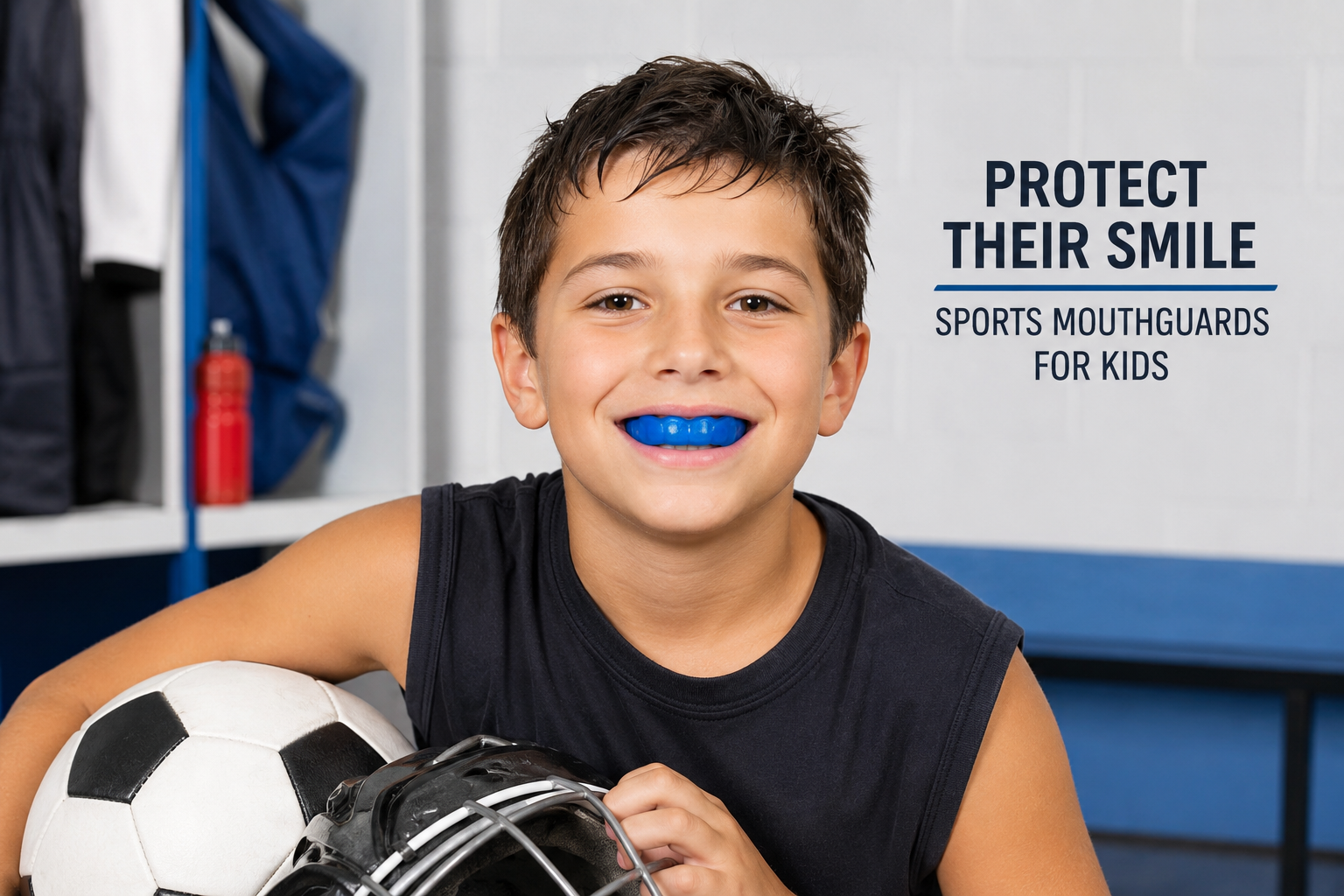
A custom mouthguard made by a pediatric dentist is the gold standard for youth sports dental protection. Created from an impression of your child’s teeth, a custom mouthguard children wear fits precisely, stays securely in place, and doesn’t interfere with breathing or communication during play. Custom guards are made from high-quality, durable materials and typically last significantly longer than over-the-counter alternatives. They also offer superior shock absorption, protecting teeth, gums, and jaw structures more effectively than any store-bought option.
Benefits of a Custom Sports Mouthguard
Parents who invest in a pediatric mouthguard from a dental professional consistently report better compliance from their children—because a well-fitting guard is simply more comfortable to wear.
Key benefits of a custom sports mouthguard include:
- Superior comfort: Fits the exact contours of your child’s mouth
- Better retention: Stays in place during high-intensity activity
- Unrestricted breathing: Critical for performance and safety
- Easier communication: Your child can talk to teammates and coaches without removing it
- Greater shock absorption: Designed to distribute impact force more effectively
- Brace-compatible options: Specially designed to protect brackets and wires
- Long-term value: Durable construction means fewer replacements over a season
How Mouthguards Protect Growing Teeth
Children’s mouths are not miniature versions of adult mouths—they’re actively developing. Baby teeth hold space for permanent teeth. Jaw bones are still forming. Soft tissues like the lips, tongue, and gums are more vulnerable to injury than in adults.
A properly fitted kids’ athletic mouthguard protects all of these structures simultaneously. It cushions the teeth against direct impact, reduces the force transmitted to the jaw, and shields the lips, cheeks, and tongue from lacerations. For children in the mixed dentition phase—where baby and permanent teeth coexist—this protection is particularly important.
Kids with Braces Need Extra Protection
Children undergoing orthodontic treatment face unique risks during sports. A direct blow to the mouth can drive brackets into the lips and cheeks, cause wires to snap and lacerate soft tissue, or result in tooth damage that disrupts the course of treatment.
Standard stock or boil-and-bite guards don’t accommodate orthodontic hardware well. A pediatric dentist can create a specially designed mouthguard that fits over braces comfortably, protecting without compromising the orthodontic work already in progress.
How to Choose the Right Kids’ Athletic Mouthguard
When selecting a mouthguard for your child, use this checklist as a guide:
- Proper fit—should feel snug without causing discomfort
- BPA-free materials
- Easy to clean and maintain
- Doesn’t restrict normal breathing
- Durable enough to withstand regular use
- Recommended or made by a pediatric dentist
A kid’s athletic mouthguard that meets all of these criteria is most likely a custom option from a dental professional—not something pulled off a shelf.
Caring for Your Child’s Mouthguard
A mouthguard is only as effective as its condition. Follow these simple care steps to extend its lifespan and keep it hygienic:
- Rinse with cold water after every use
- Brush gently with a toothbrush and mild soap (not toothpaste, which can be abrasive)
- Store in a ventilated case to prevent bacterial growth
- Keep away from hot environments, which can warp the material
- Replace immediately if you notice damage
- Bring it to dental checkups so your dentist can assess the fit
When Should a Mouthguard Be Replaced?
Children’s mouths change quickly, and a mouthguard that fit well last season may not offer adequate protection this year. Replace your child’s mouthguard if you notice:
- A loose or shifting fit
- Visible cracks, holes, or worn edges
- Significant growth since the last fitting
- Changes in orthodontic treatment (new braces, retainers, etc.)
As a general rule, have the fit evaluated at each dental checkup and before every new sports season.
Why Montgomery Parents Choose a Pediatric Dentist for Sports Mouthguards
Families seeking a sports mouthguard for kids in Montgomery have access to pediatric dental professionals who specialize in exactly this type of care. Unlike an off-the-shelf purchase, a dentist-fitted mouthguard comes with personalized assessment, precise fitting, and ongoing support throughout the sports season.
A pediatric dentist can:
- Take accurate impressions to create a guard that fits perfectly
- Adjust the guard as your child grows or if their bite changes
- Monitor oral health at each visit and flag any concerns early
- Provide specific recommendations based on the sport and your child’s dental history
For parents, that level of professional involvement means genuine peace of mind—not just during practices and games, but year-round.
Protect Your Child’s Smile Before the Next Season Starts
Dental injuries are among the most common—and most preventable—injuries in youth sports. A well-fitted mouthguard won’t slow your child down on the field, but it will protect the teeth and jaw structures they’ll rely on for a lifetime.
Before your child’s next season begins, schedule a consultation with a pediatric dentist in Montgomery. A custom mouthguard is one of the simplest investments you can make in your child’s long-term health—and their smile will thank you for it.
FAQs
Ans: – Children face a significantly higher risk of dental injury during sports than adults, partly because their mouths are still developing. A mouthguard cushions the teeth and jaw against impact, reducing the likelihood of broken or knocked-out teeth, jaw injuries, and soft tissue lacerations.
Ans: – Yes. Custom mouthguards made by a pediatric dentist offer a precise fit, better shock absorption, and greater durability than stock or boil-and-bite options. They’re also more comfortable, which means children are more likely to wear them consistently.
Ans: – Absolutely—and they should. Children with braces are at heightened risk because brackets and wires can injure the lips and cheeks on impact. A pediatric dentist can create a specially fitted mouthguard designed to accommodate orthodontic hardware safely.
Ans: – Replace the mouthguard if it shows signs of damage (cracks, holes, worn edges), if it no longer fits snugly, or if your child has experienced significant dental changes such as new braces or tooth loss. At a minimum, have the fit checked before each sports season.
Ans: – Mouthguards are mandatory in sports like football, hockey, lacrosse, and wrestling, but dental injuries occur across a wide range of activities—including basketball, soccer, gymnastics, skateboarding, and BMX biking. Any sport that involves movement, speed, or physical contact carries some level of risk.