Children rarely say “my tooth hurts” the moment something goes wrong. More often, they pick at their food, rub their jaw, or simply stop mentioning it—leaving parents to connect the dots. Knowing the signs your child needs a dentist appointment can mean the difference between a quick fix and a complicated procedure.
Dental problems in children often begin as small, subtle symptoms. A minor cavity left untreated can progress into a painful infection. Early enamel damage that goes unnoticed can lead to sensitivity and structural problems down the road. And because kids don’t always have the words—or the awareness—to describe oral discomfort, many issues quietly worsen before anyone notices.
This guide covers 10 kids’ dental warning signs every parent should know, explains when symptoms require urgent care, and offers practical tips for keeping your child’s smile healthy between visits.
Why Early Dental Visits Matter for Children’s Oral Health
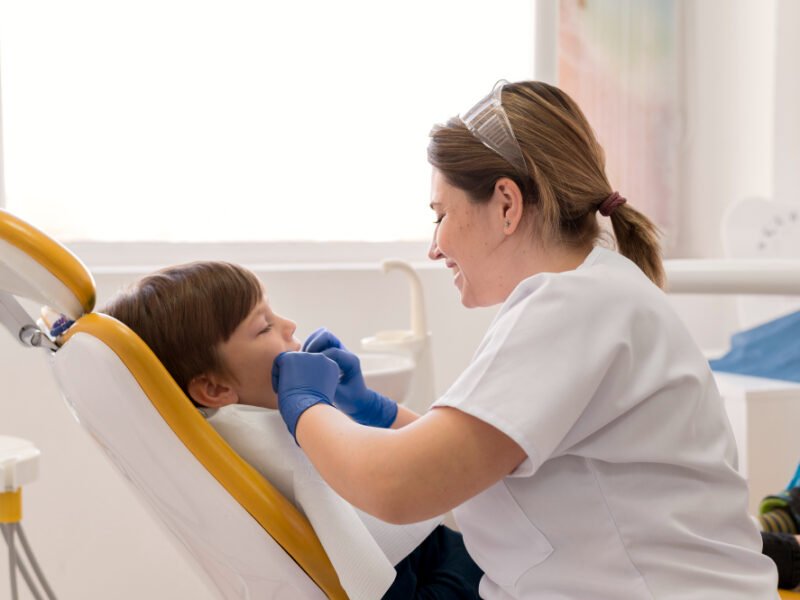
Routine dental exams aren’t just for cleaning teeth. Pediatric dentists use these visits to spot problems that aren’t visible to the naked eye—early decay between teeth, developing bite issues, and changes in jaw growth that parents would never catch at home.
Small problems addressed early stay small. A cavity caught in its earliest stage may only require a simple filling. Left alone, that same cavity can reach the nerve, cause significant pain, and require more intensive treatment. Preventive care—cleanings, fluoride treatments, and dental sealants—dramatically reduces the likelihood of those larger interventions.
Routine exams also build familiarity and trust. Children who visit the dentist regularly are far less likely to experience dental anxiety as they grow older.
10 Signs Your Child Needs a Dentist Appointment
1. Persistent Toothache or Complaints of Mouth Pain
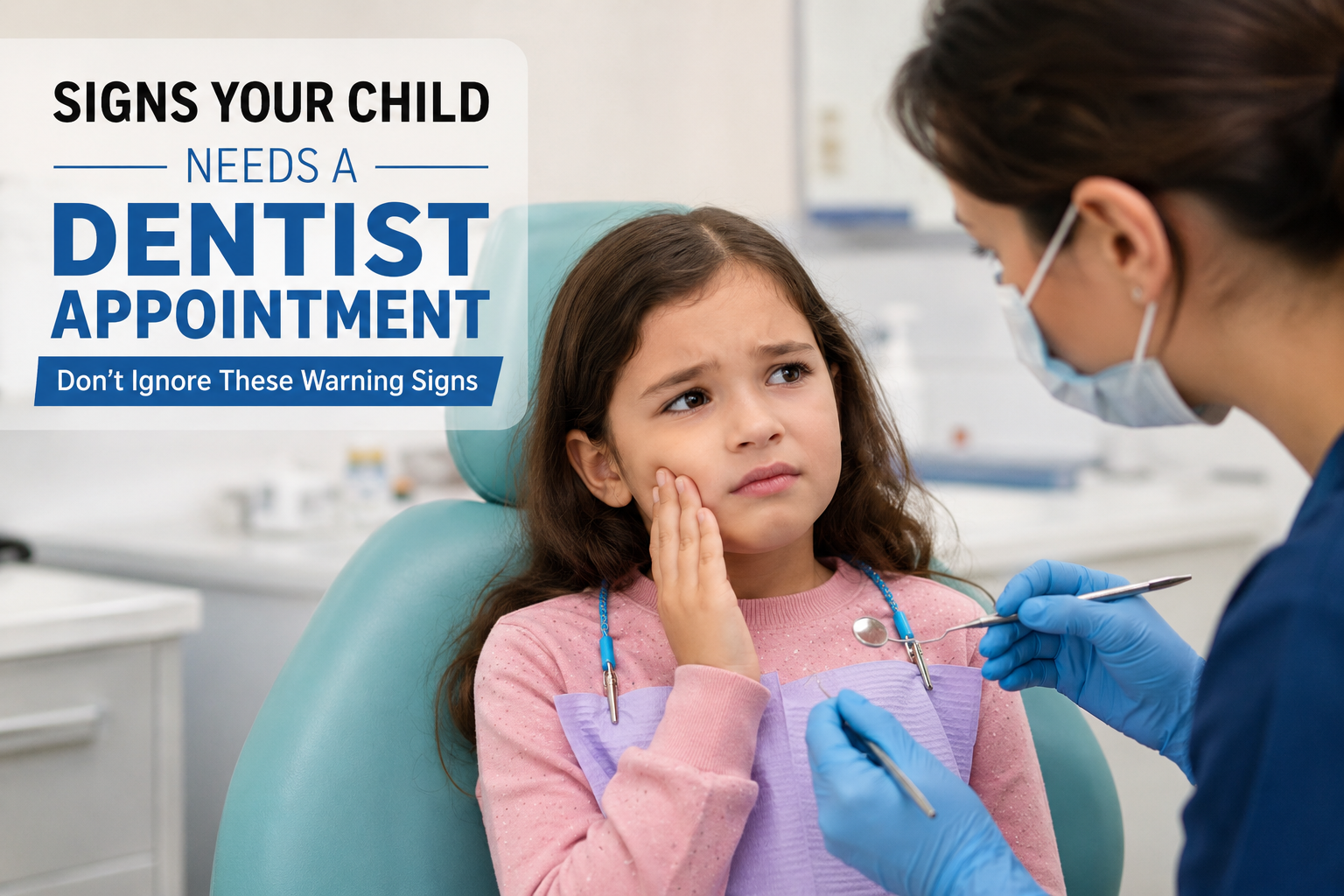
Any signs of a toothache in children deserve attention, but persistent pain is especially important to address quickly. Toothaches in children are commonly caused by cavities, food trapped between teeth, or dental infections. Younger children may not say “my tooth hurts”—instead, watch for reluctance to chew on one side, rubbing the face or jaw, or sudden irritability around mealtimes.
2. Tooth Sensitivity to Hot, Cold, or Sweet Foods
Child tooth sensitivity to temperature or sweetness is not something to brush off. While some mild sensitivity can occur during normal tooth development, persistent or sharp reactions often point to early enamel damage, a developing cavity, or a small crack in the tooth. Sensitivity is the tooth’s way of signaling that something has changed structurally—and the sooner a dentist evaluates it, the better.
3. Swollen, Red, or Bleeding Gums
Healthy gums are firm and pink. Gums that appear red, swollen, or bleed during brushing may indicate gingivitis or the early stages of gum disease—both of which can develop in children, particularly when brushing habits are inconsistent. Some gum irritation can result from brushing too hard, but persistent bleeding or swelling should always be evaluated by a pediatric dentist.
4. Bad Breath That Doesn’t Go Away
All children experience temporary bad breath, especially in the morning or after certain foods. Chronic bad breath that persists despite good brushing habits is a different story. Ongoing halitosis in children can signal plaque buildup, an untreated cavity, a gum infection, or dry mouth. A dentist can identify the source and recommend appropriate treatment.
5. White, Brown, or Black Spots on Teeth
Spots or discoloration on your child’s teeth are often early cavity signs. White spots can indicate enamel demineralization—the first stage of tooth decay—while brown or black spots often mean decay has progressed further. Catching these changes early matters enormously. At the demineralization stage, treatment may be as simple as fluoride application. Once decay advances, a filling or more extensive restoration becomes necessary.
6. Loose Permanent Teeth or Delayed Tooth Loss
Loose baby teeth are normal. Loose permanent teeth are not. If a permanent tooth feels wobbly, the cause could be an injury, an underlying infection, or a developmental issue that needs professional assessment. Equally, if a child hasn’t started losing baby teeth within the typical age range, a pediatric dentist can evaluate whether there’s a delay that warrants attention.
7. Difficulty Chewing or Avoiding Certain Foods
Pay attention if your child suddenly avoids foods they previously enjoyed, especially harder textures. Pain during eating often points to hidden cavities, a cracked tooth, or a broken filling. Children frequently adapt their eating habits to avoid discomfort without mentioning it—so a change in food preferences can be a meaningful clue.
8. Teeth Grinding (Bruxism)
Grinding or clenching teeth—particularly at night—is common in children and often related to stress, sleep disturbances, or misalignment. Occasional grinding may resolve on its own, but persistent bruxism can cause noticeable tooth wear, jaw discomfort, and headaches. A pediatric dentist can assess the extent of the wear and recommend solutions such as a custom night guard if treatment is necessary.
9. Mouth Injury or Chipped Tooth
Accidents happen, especially with active kids. Falls, sports injuries, and collisions can chip, crack, or knock out teeth entirely. A chipped primary tooth may seem minor, but it can have sharp edges that irritate soft tissue, or the damage may be deeper than it appears. A knocked-out permanent tooth is a true dental emergency—time matters, and prompt care gives the best chance of saving the tooth.
10. It’s Been More Than Six Months Since the Last Dental Visit
This one is straightforward: if six months have passed without a checkup, it’s time to book one. Routine dental exams allow pediatric dentists to perform professional cleanings, take X-rays when needed, apply fluoride treatments, and place sealants on vulnerable molars. These visits prevent problems from developing rather than simply responding to them.
Signs That Require Immediate Dental Attention
Some symptoms cannot wait for a scheduled appointment. If your child experiences any of the following, contact a pediatric dentist right away:
- Severe or worsening tooth pain
- Facial swelling
- A knocked-out permanent tooth
- A broken tooth with significant pain or an exposed nerve
- Bleeding that won’t stop after 10–15 minutes
- Signs of a dental abscess (swelling, pus, or a pimple-like bump on the gums)
- Fever accompanied by oral swelling or pain
These symptoms can indicate infection, serious injury, or conditions that may worsen rapidly. Swelling near the jaw or face, in particular, can spread and become a medical emergency if not treated quickly. Don’t wait—call your pediatric dentist immediately.
How Parents Can Prevent Dental Problems
Prevention is always easier than treatment. Building good dental habits at home reduces the risk of the most common childhood dental issues:
- Brush twice daily using a fluoride toothpaste appropriate for your child’s age
- Floss every day, starting as soon as two teeth touch
- Offer a diet low in sugar, especially between meals
- Encourage water over sugary drinks like juice and sports drinks
- Use a mouthguard during contact sports or activities with fall risk
- Attend regular dental checkups every six months
- Limit sticky and starchy snacks, which cling to teeth and promote decay
These habits, established early, form the foundation of lifelong oral health.
When to Take Your Child to the Dentist Early
Dental care starts earlier than most parents realize. For infants, the American Academy of Pediatric Dentistry recommends a first dental visit by the time the first tooth appears—or by age one, whichever comes first. Toddlers benefit from early exams that catch developmental concerns before they become complicated.
School-age children and teens, meanwhile, face increased risk from diet choices, sports injuries, and orthodontic changes. Knowing when to take your child to the dentist early—and not waiting for pain to appear—sets them up for healthier outcomes at every stage.
The distinction between emergency and routine visits matters too. Routine appointments prevent problems. Emergency visits address them after they’ve already developed. Ideally, your child’s relationship with their pediatric dentist is built on the former.
Why Choose a Pediatric Dentist?
Pediatric dentists complete two to three additional years of specialized training beyond dental school, focusing exclusively on the oral health of infants, children, and adolescents. That specialization makes a genuine difference.
A pediatric dental office is designed with children in mind—from the physical environment to the way appointments are structured. Pediatric dentists are trained in behavior guidance techniques that help anxious or young patients feel comfortable and cooperative. Their care is preventively focused, aimed at stopping problems before they start and building positive associations with dental visits that last a lifetime.
Whether your child needs a routine cleaning or treatment for a more complex issue, a pediatric dentist has the experience, training, and approach to provide care that’s appropriate for their age and development.
Trust Your Instincts—and Act Early
Parents notice things. A change in eating habits, a wince during a snack, a child who suddenly doesn’t want to brush—these small observations matter. If something seems off, it’s always worth a call to your pediatric dentist.
Early treatment consistently means simpler, less invasive care. A spot caught at the start of decay is far easier to treat than an infection that’s been brewing for months. Most importantly, addressing dental concerns early protects your child from unnecessary pain.
If you’ve noticed any of the warning signs above—or if it’s simply been a while since your child’s last checkup—schedule an appointment with the team at Best Dentist 4 Kids. Serving families across Philadelphia, Hatboro, and Montgomeryville, PA, the team provides compassionate, expert pediatric dental care your child can actually look forward to.
Frequently Asked Questions
Ans: – Common early signs include complaints of mouth pain, visible spots or discoloration on teeth, swollen or bleeding gums, persistent bad breath, and difficulty chewing. Children who haven’t had a checkup in more than six months should also be seen, even without symptoms.
Ans: – Any toothache that lasts more than a day or two, or that is accompanied by swelling, fever, or visible gum changes, should be evaluated by a dentist promptly. Severe or worsening pain is a sign to seek same-day care.
Ans: – Mild sensitivity during tooth eruption can be normal. However, persistent sensitivity to hot, cold, or sweet foods—particularly in teeth that have fully emerged—is not normal and may indicate enamel damage or a cavity that needs treatment.
Ans: – Most children benefit from dental checkups every six months. Some children with higher cavity risk or specific orthodontic concerns may need more frequent visits. Your pediatric dentist can recommend the right schedule for your child.
Ans: – Seek immediate dental care if your child has severe tooth pain, facial swelling, a knocked-out permanent tooth, a broken tooth with pain, bleeding that won’t stop, signs of a dental abscess, or a fever with oral swelling. These situations require urgent attention and should not wait for a routine appointment.