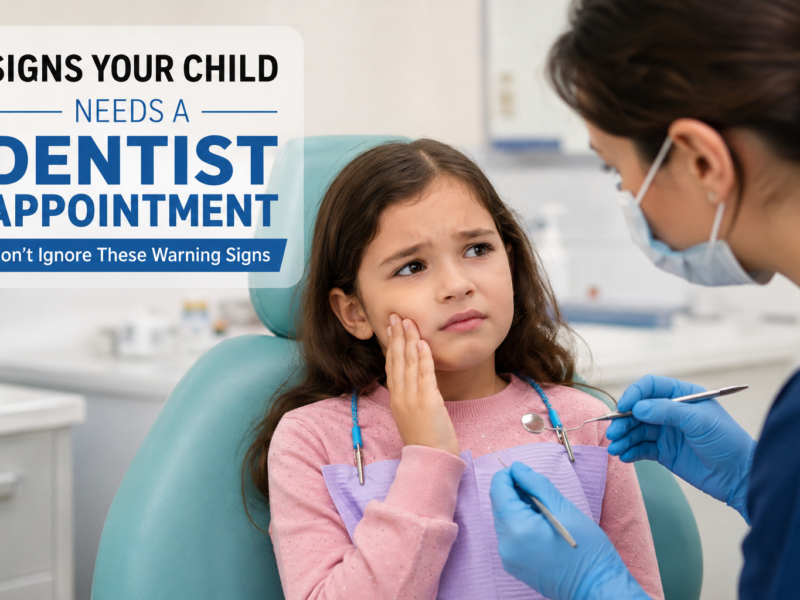
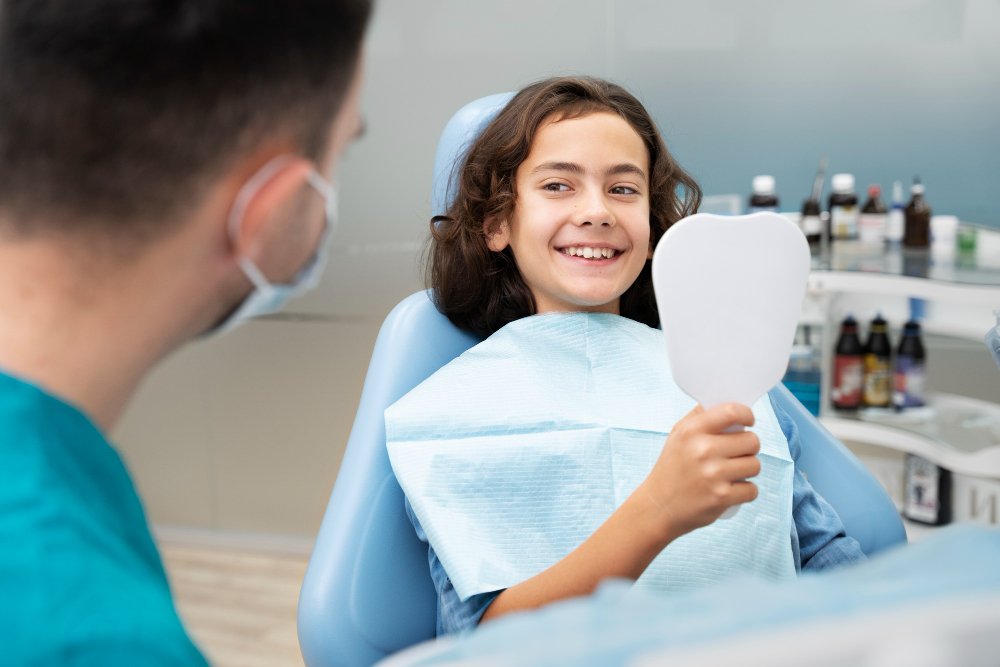
Your child’s first dental visit is a bigger milestone than most parents realize. It sets the tone for how your child feels about dental care for the rest of their life—and it gives their dentist the chance to catch small problems before they become big ones.
Many parents assume they can wait until their child has a full set of teeth, or until their child turns three or four. But dental professionals recommend starting much earlier. According to the American Academy of Pediatric Dentistry (AAPD), children should see a dentist by their first birthday or within six months of their first tooth erupting—whichever comes first.
If you’re a parent in the Philadelphia area and you’re wondering when and how to schedule your child’s first dental visit, this guide covers everything you need to know.
When Should You Schedule Your Child’s First Dental Visit?
The AAPD’s “first tooth or first birthday” rule surprises many parents. Baby teeth can start appearing as early as six months, so some children may need their first appointment before they turn one.
Why so early? Baby teeth are more cavity-prone than adult teeth, and decay can develop quickly. Early visits help parents learn how to properly clean their child’s teeth, choose the right toothpaste, and avoid habits that can cause problems down the line.
There are also signs that your child shouldn’t wait for the one-year mark. If you notice white or brown spots on the teeth, swollen gums, tooth pain, or delayed tooth eruption (no teeth by 12 months), schedule a baby’s first dentist appointment as soon as possible.
The benefits of preventive care at this stage are well-documented. Early visits reduce the risk of cavities, support healthy jaw and tooth development, and give children positive associations with dental care before anxiety has a chance to take hold.
Why Early Dental Visits Are So Important
Tooth decay is the most common chronic childhood disease in the United States—yet it’s largely preventable. Starting dental visits early gives pediatric dentists the opportunity to:
- Prevent cavities before they start by identifying risk factors and coaching parents on proper hygiene
- Monitor jaw and tooth development to flag any concerns early
- Establish healthy oral habits tailored to your child’s age and needs
- Detect dental concerns like tongue ties, spacing issues, or early signs of misalignment
- Build trust between your child and their dentist, making future visits far less stressful
Families seeking a children’s dentist in Philadelphia benefit greatly from early preventive care. The earlier children become comfortable in a dental setting, the more likely they are to maintain consistent care throughout their lives.
What Happens During Your Baby’s First Dentist Appointment?
Parents often expect a lengthy, clinical process. In reality, a pediatric dentist’s first visit is gentle, brief, and focused on education as much as examination. Here’s what typically happens:
Gentle Examination
The dentist checks your child’s teeth, gums, bite, and jaw development. For very young children, this is often done with the child resting in the parent’s lap—sometimes called the “knee-to-knee” exam—to keep the experience calm and comfortable.
Cleaning (If Needed)
If any plaque or buildup is present, the dentist may do a light cleaning. For infants, this step is usually minimal.
Fluoride Discussion
The dentist will discuss whether fluoride treatments or fluoride toothpaste are appropriate based on your child’s age, diet, and cavity risk.
Oral Hygiene Guidance
Parents receive clear, age-appropriate instructions on how to brush their child’s teeth, how often, and what products to use.
Nutrition Counseling
Diet plays a major role in dental health. The dentist may discuss sugary drinks, feeding habits, and foods that support strong teeth.
Answering Parents’ Questions
This is your chance to ask about teething, thumb sucking, pacifier use, or anything else that’s been on your mind. Pediatric dentists expect questions—and welcome them.
How Parents Can Prepare for the First Dental Visit
A little preparation goes a long way in making the first visit a positive one. Here are some practical tips:
- Schedule a morning appointment when your child is well-rested and more cooperative
- Bring comfort items like a favorite toy or blanket to help your child feel secure
- Avoid saying “it won’t hurt”—this plants the idea that it might, and can increase anxiety
- Practice at home by gently opening your child’s mouth and counting their teeth
- Complete paperwork in advance if the practice offers online forms
- Bring your child’s medical history, including any medications, allergies, or health conditions
Keeping the conversation light and positive before the visit helps your child approach it with curiosity rather than fear.
Common Dental Problems Found During Early Childhood
Pediatric dentists are trained to identify and address a range of issues that commonly appear in young children:
- Baby bottle tooth decay: Caused by prolonged exposure to sugary liquids (including milk and juice) via bottle or sippy cup
- Thumb sucking and pacifier habits: Harmless in infancy, but potentially problematic for tooth alignment if they continue past age three
- Delayed tooth eruption: No teeth by 12–15 months may warrant an X-ray or monitoring
- Tongue tie (ankyloglossia): A brief assessment can determine whether a frenectomy may improve feeding, speech, or oral hygiene
- Early cavities: White spot lesions are the earliest sign of decay and can often be reversed with fluoride and habit changes
Catching these issues early prevents more complex—and costly—treatment later.
Tips for Keeping Your Child’s Teeth Healthy Between Visits
Good dental health is built between appointments, not just at them. Here’s what parents can do at home:
- Brush twice daily using a soft-bristled, age-appropriate toothbrush
- Use a rice-sized amount of fluoride toothpaste for children under three; a pea-sized amount for ages three to six
- Offer healthy snacks like cheese, vegetables, and fruit instead of crackers or candy
- Limit sugary drinks, including juice, flavored milk, and sports drinks
- Avoid putting your child to bed with a bottle containing anything other than water
- Schedule routine dental checkups every six months
Why Choose a Pediatric Dentist Instead of a General Dentist?
Not all dentists are the same. Pediatric dentists complete an additional two to three years of specialized training after dental school, focused specifically on children’s oral health.
| Pediatric Dentist | General Dentist |
|---|---|
| Specialized training for children | Treats patients of all ages |
| Child-friendly environment | General dental setting |
| Behavior management techniques | Limited pediatric focus |
| Expertise in baby and mixed dentition | Broad dental care |
For a pediatric dentist’s first visit, the environment alone makes a difference. Child-centered offices are designed to reduce anxiety through décor, distraction, and a team trained to work with young patients at every developmental stage.
Choosing the Right Children’s Dentist in Philadelphia
With several options available in the area, it helps to know what to look for:
- Board-certified pediatric dentists with demonstrated expertise in children’s oral health
- A kid-friendly office with a welcoming, low-stress atmosphere
- Positive reviews from local families
- A gentle, patient approach to behavior management
- Modern technology, like digital X-rays, minimizes radiation exposure
- Preventive-focused care that prioritizes long-term health over unnecessary procedures
- Convenient scheduling that works around school and family commitments
- A family-centered experience where parents are informed and involved at every step
Finding a children’s dentist in Philadelphia who checks all these boxes gives your child the best possible start.
Why Families Trust Best Dentist 4 Kids
Best Dentist 4 Kids has been serving Philadelphia families for years, with a team of experienced and board-certified pediatric dentists dedicated to making every visit a good one. Their Philadelphia office on Roosevelt Blvd features hygiene rooms with TVs, a game room, and a welcoming atmosphere designed specifically for children.
The team—including Dr. Michael Koumaras, Dr. Dena, Dr. Gracie, and Dr. Lennie Checchio—brings a gentle, compassionate approach to every appointment. Parents are welcomed into the treatment room, kept informed throughout, and given clear guidance on how to support their child’s oral health at home.
From infant dentistry and laser frenectomies to preventive care and orthodontics, Best Dentist 4 Kids offers comprehensive, personalized treatment plans for children at every stage of development.
As one Philadelphia parent shared: “It was my two-year-old’s first time going to the dentist, and they made her feel comfortable enough to actually get her teeth cleaned. Best dentist and staff for kids ever.”
Start Early, Smile Long
Early dental visits give children the foundation they need for a lifetime of healthy smiles. The first visit isn’t something to dread—it’s a short, gentle, and educational appointment designed to support your child and give you the tools to keep their teeth healthy at home.
Don’t wait until there’s a problem to make that first call. Ready to schedule your child’s first dental visit in Philadelphia? Contact Best Dentist 4 Kids today at (215) 333-9697 or visit BestDentist4Kids.com to book an appointment and give your child a positive start toward lifelong oral health.
FAQs
Ans: – The American Academy of Pediatric Dentistry recommends scheduling a child’s first dental visit by their first birthday or within six months of their first tooth erupting—whichever comes first.
Ans: – A pediatric dentist will gently examine the teeth, gums, bite, and jaw development. The visit also includes oral hygiene guidance for parents, a fluoride discussion, nutrition counseling, and an opportunity to ask questions.
Ans: – Most first visits last between 30 and 45 minutes. The examination itself is brief; much of the time is spent educating parents and answering questions.
Ans: – Schedule a morning appointment when your child is rested, bring a comfort item, practice opening their mouth at home, and keep the conversation positive. Avoid phrases that suggest the visit might be scary or painful.
Ans: – No. The first visit is designed to be gentle and non-invasive. For most young children, it involves a simple examination and possibly a light cleaning—nothing that should cause discomfort.